
End-of-Year Reflection: 10 Questions for Your Team
As the year winds down, many organizations are thinking about how to create space for reflection without defaulting to traditional performance reviews. If you're looking for a more collaborative, humanizing approach—one that recognizes people as experts in their own experience—this post is for you.
I recently worked with a client to develop end-of-year self-reflection questions for their staff. The goal wasn't to tie responses to merit increases or formal evaluations, but rather to create an opportunity for genuine reflection that could inform meaningful conversations about professional development and support.
What emerged was a set of questions that does something important: it shifts power.
Why Reflection Practices Matter for Shared Power
When we invite people to reflect on their own contributions, name their challenges, and articulate what they need, we recognize them as experts in their own experience.
Traditional top-down evaluations position the supervisor as the sole assessor of value and progress. But reflection-based approaches distribute that authority more equitably. They create space for people to claim their accomplishments, identify their own learning edges, and advocate for what they need to thrive.
This is what shared power looks like in practice: building communities where everyone has voice and agency in shaping their growth and the conditions that support their success.
How to Use These Questions
These 10 questions are designed for staff to complete independently, setting aside about 30 minutes for thoughtful responses. Their answers then become the foundation for development conversations with supervisors—shifting those conversations from evaluation to collaborative planning.
A few tips for implementation:
Frame it clearly. Let people know this isn't a performance review and won't be used for merit decisions. Be explicit that you're seeking their honest reflection to inform how you can better support them.
Give adequate time. Two weeks is ideal. People need space to think, not pressure to respond quickly.
Follow up meaningfully. Schedule time to discuss their responses. Show that their reflection matters by acting on what you learn.
Model it yourself. Consider answering these questions about your own work and sharing (where appropriate) what you learned from the process.
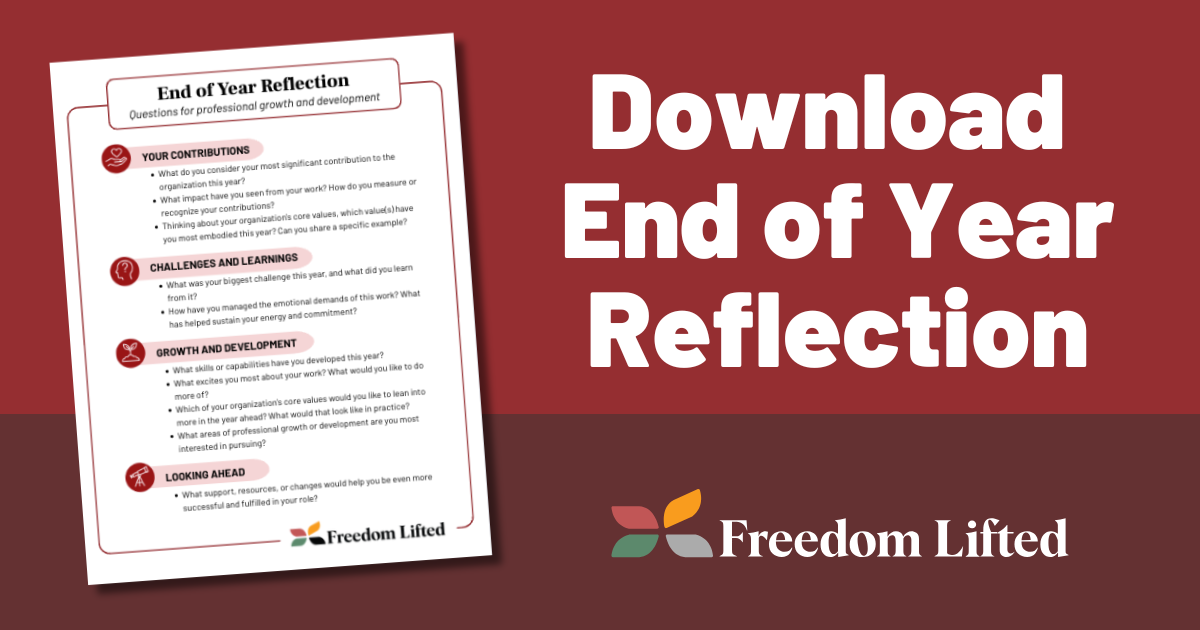
The 10 Questions (separated by topic)
Your Contributions
What do you consider your most significant contribution to the organization this year?
What impact have you seen from your work? How do you measure or recognize your contributions?
Thinking about your organization's core values, which value(s) have you most embodied this year? Can you share a specific example?
Challenges and Learning
4. What was your biggest challenge this year, and what did you learn from it?
5. How have you managed the emotional demands of this work? What has helped sustain your energy and commitment?
Growth and Development
6. What skills or capabilities have you developed this year?
7. What excites you most about your work? What would you like to do more of?
8. Which of your organization's core values would you like to lean into more in the year ahead? What would that look like in practice?
9. What areas of professional growth or development are you most interested in pursuing?
Looking Ahead
10. What support, resources, or changes would help you be even more successful and fulfilled in your role?
Adapting for Your Context
Feel free to modify these questions to fit your organization's culture and needs. You might:
Adjust question 3 and 8 to reference your specific organizational values
Add questions about team dynamics or collaboration if that's particularly relevant
Remove or combine questions to make the process shorter
Use a subset of these questions for more frequent check-ins throughout the year
Not Supervising Anyone? Use These for Yourself
These questions aren't only for teams. They're also powerful tools for personal reflection. If you're in transition, feeling stuck, or simply ready for some honest self-assessment, working through these questions can help you check in with yourself about what's working, what's not, and what you need.
Moving Forward
As organizations rooted in justice and equity, we talk a lot about dismantling oppressive power structures in the world. Reflection practices like this one are small but meaningful ways we can practice shared power internally—creating organizational cultures that align with the values we're fighting for externally.
What would it mean for your organization to truly trust people as experts in their own experience? These questions are one place to start.