
3 Things That Decide If a Training Sticks
Shared Power is about more than language, strategies, and tools.
This is an idea I’ve returned to again and again. And admittedly, I don’t have it all worked out yet…
As a facilitator, I can offer a framework. I can demonstrate structure, strategies, and tools. I can offer language, practice time, and a room of people doing the same hard thing at the same time.
What I cannot offer are the three things that determine whether any of it actually makes a difference:
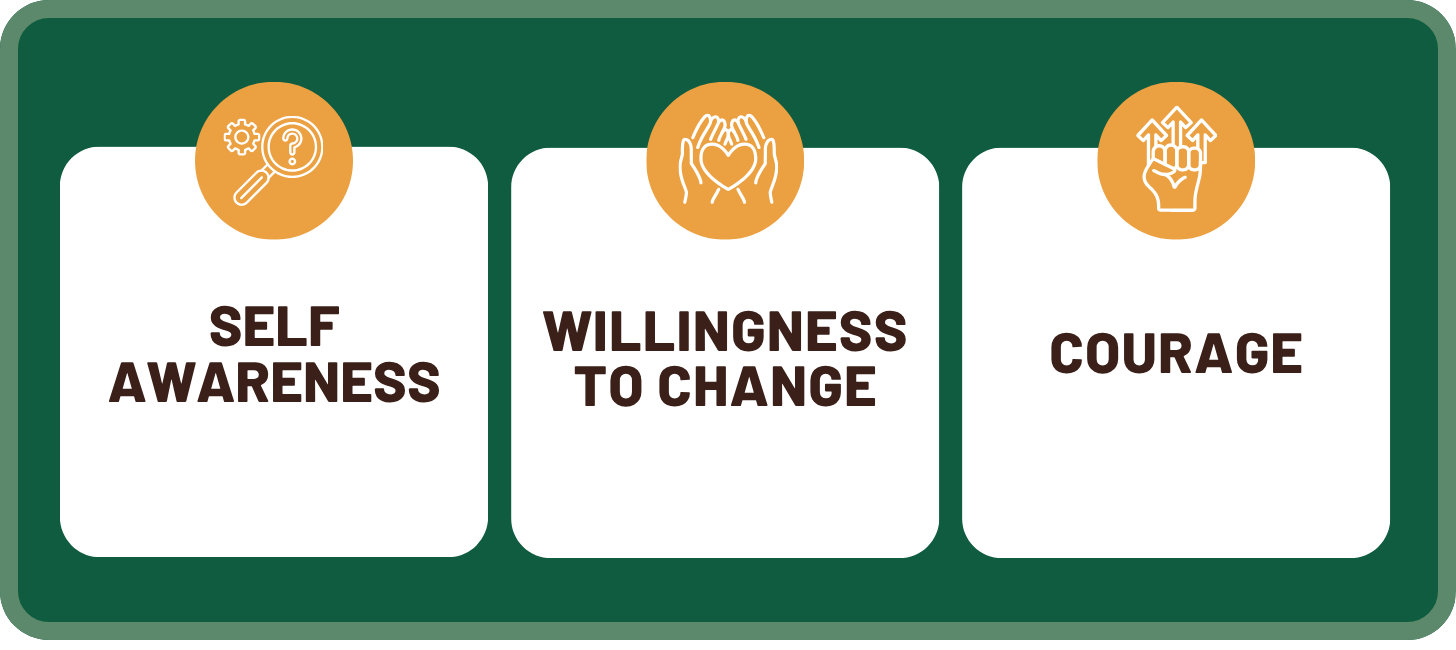
Self-awareness. Willingness to change. Courage.
No training gives people these three things. (Not mine, not anyone's.) But without them, even the best curriculum in the world is just a good time that changes nothing on Monday.
Let’s look at each one in detail.
1 - Self-awareness
Self-awareness is: The capacity to notice ourselves in the moment, not only in hindsight; register the impact we’re having, while it’s happening; and remain curious about it, rather than defensive.
Rita Sever lays this out as a progression in her book Leading for Justice. In her chapter titled, "A Look in the Mirror," Rita explains that self-reflection leads to self-awareness, which leads to self-management.
Reflection is a practice we schedule: How did that go? How are people responding to me? What could I have done differently? Is there anything I can still do to make it better? Awareness is what develops over time: The ability to catch ourselves in real time instead of within the rush of thoughts that inconveniently impedes a good night’s sleep later on. Self-management is the skill that results: When we can see the impact of an action before we take it – and we choose something else.
I love Rita Sever’s framework, because it refuses to treat self-awareness as a personality trait. Rather, self-awareness is a practice with steps; and each step requires intention and humility.
Now, there is a second layer to self-awareness that I think gets overlooked, especially in productivity-centered workplaces. In Radical Candor, Kim Scott names the next step of relational awareness, i.e. recognizing how your emotions, words, and behaviors land for the people around you.
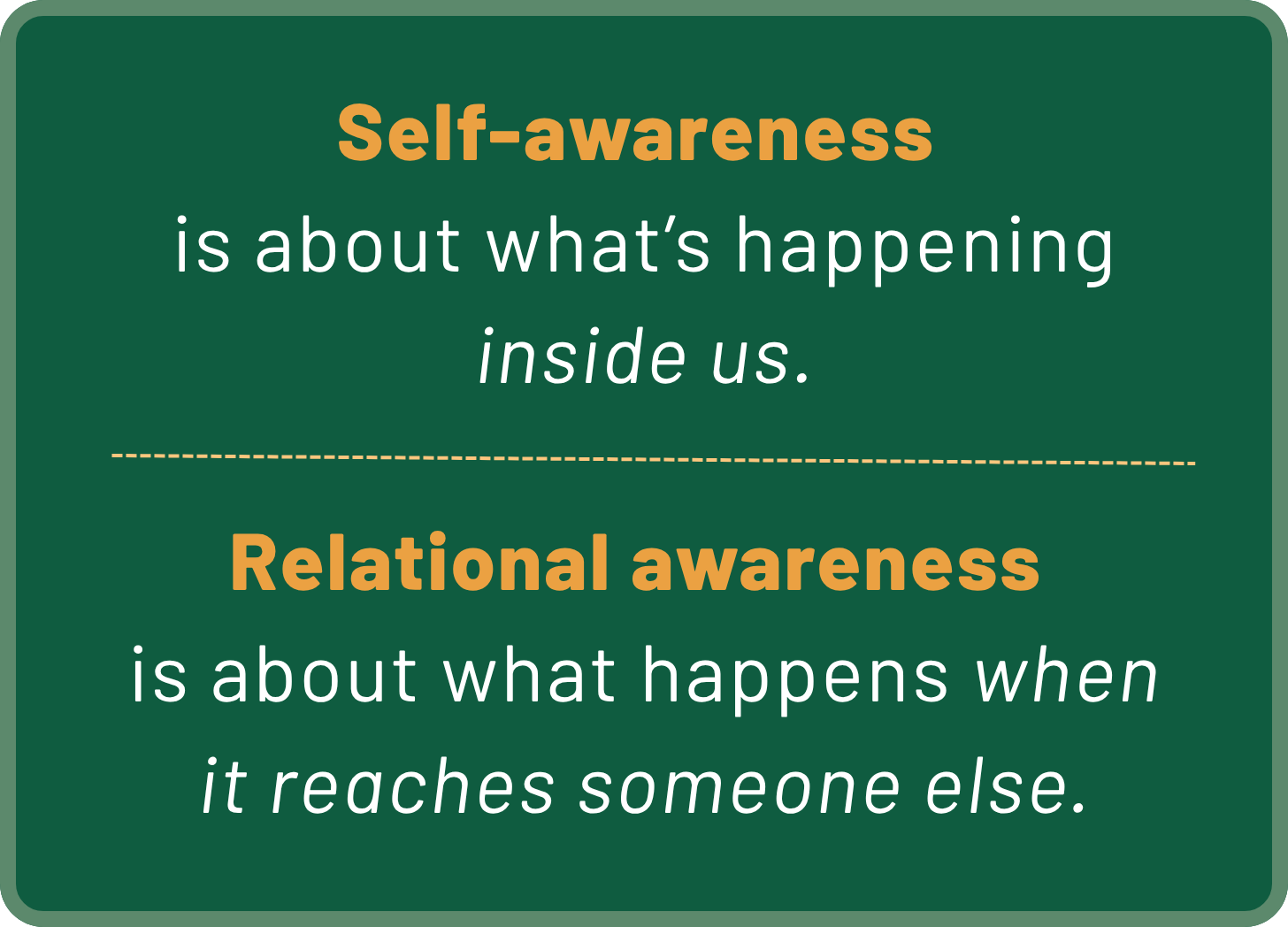
Self-awareness is about what’s happening inside us. Relational awareness is about what happens when it reaches someone else – and these two things are not the same! We can have a decent general read on how we come across and still be wrong about how it lands for one person, in one relationship, on one day. The same directness one person experiences as respect, another might experience as an attack.
Which is to say: It’s not enough to know ourselves. We have to keep learning how to relate to the specific people we work with.
2 - Willingness to Change
Maintaining a willingness to change mostly means letting go of the need to be right.
I learned this framing from the Conscious Leadership Group, and I think about it constantly (since I really like being right). But, as long as being right is our goal, feedback will feel like a threat to manage instead of information we can use. In other words, nothing can move or change.
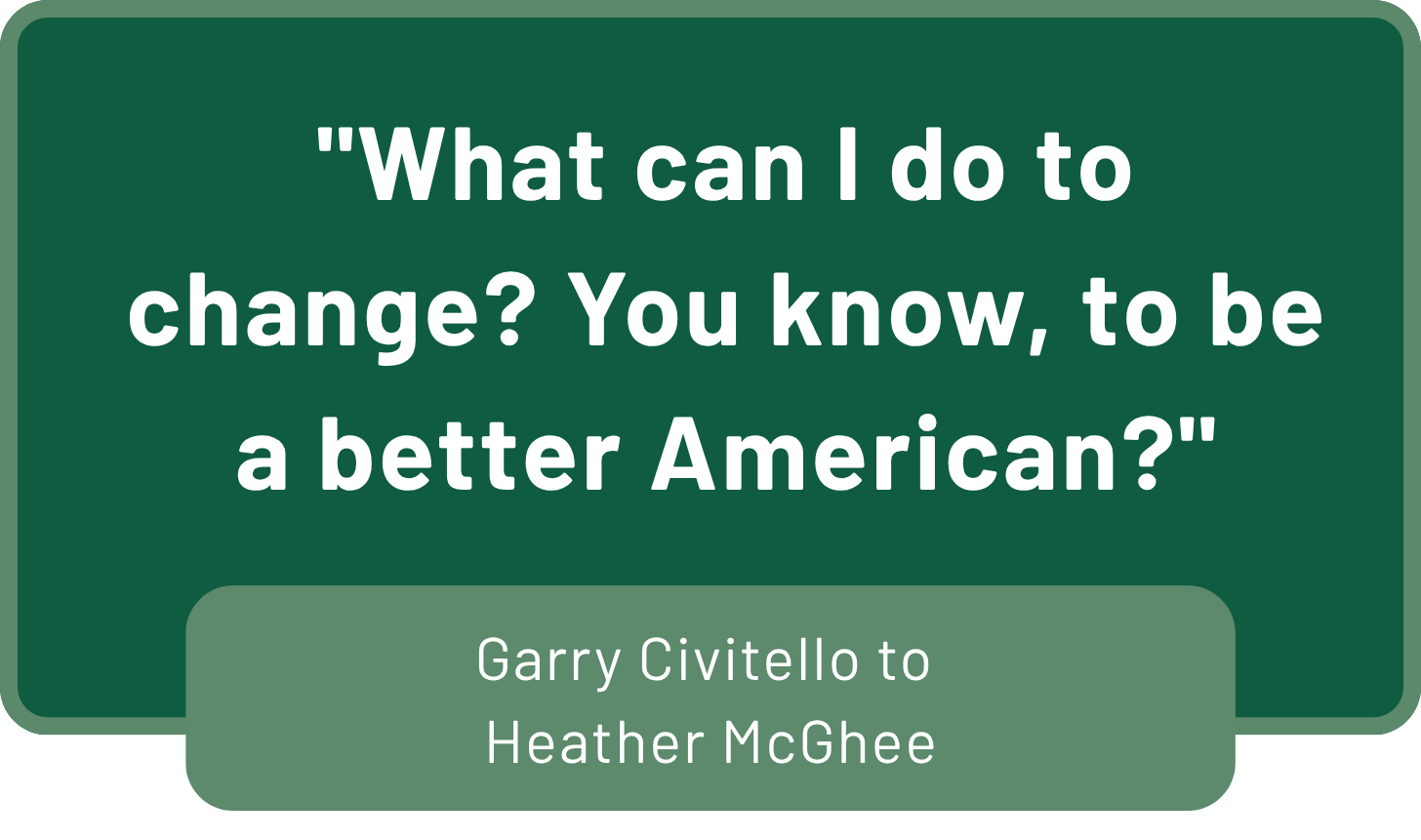
One of the best examples I’ve seen of this willingness to change is a listener phone call and exchange on C-SPAN from August 2016. (You can listen to the whole 4-minute exchange here). A man named Garry Civitello called into C-SPAN's Washington Journal where Heather McGhee (then-President of Demos Action) was a guest on the show. He said he was a white man, that he was prejudiced, and then he asked her: "What can I do to change? You know, to be a better American?"
(It’s worth watching the footage rather than reading my summary of it. Gary’s voice does something in the middle of the question that’s worth listening to, if you’re able.)
Gary had every available exit: He could have argued. He could have explained his reasons. He could have asked a question designed to make him look thoughtful. Instead he said what was true about himself, on live television, to a Black woman he had never met – and then he asked for help.
This is the disposition of someone who not only wants to change but is willing to do the vulnerable work change requires. It’s not comfortable or easy. It often requires that we both identify and face our fears about who we are and what we believe – with the acknowledgement that this change might cost us (our pride, at least).
This willingness to change is also a willingness to be seen as someone who is not perfect, but a work in progress. Of this idea of a willingness to learn and change, one of our newsletter readers Shelley Lemons shared:
“I live constantly in the battle of fighting fear, reminding myself to center on personal awareness and its impact on others and reflecting in any given scenario if I am willing to change – considering the implications of the change in my life and those I love or am in service to. I think [this] question speaks to whether or not people are willing to be lifelong learners because, as freedom-centered leaders, we should always remain in spaces of growth and development in these areas. It’s what keeps us human in our work.”
3 - Courage
Courage is the ability to do something that scares us – not in the absence of fear but alongside it. Fear is reasonable when we’re both self-aware and willing to change.
Think about a hard, frightening thing you have already done: The conversation you rehearsed for a week and then finally had. The apology you owed and gave to someone who reports to you. Whatever it was, you did not just come out the other side with a new skill. You came out with a larger sense of what you are capable of – and probably a closer relationship with whoever was on the other side.
Additionally, Freedom Lifted newsletter reader Kwabena Abboa-Offei shared this about the necessity of courage:
“As Black kids, we get ‘the talk’ from our parents about having to work twice as hard, but no one really prepares us for the courage it takes to speak the truth in conservative spaces – like at work or church – even when it means disrupting those relationships.”
Often, we’re more fully ourselves after we do the things we were afraid to do. Not despite the fear, but because we moved anyway. And it might cost us.
Changing our practice as managers or supervisors means changing how we’re known at work and in front of people who have watched us do things a certain way for a while. This is genuinely scary. Having courage is moving forward in spite of being afraid and accepting the risks. A training cannot help you do this. You must decide for yourself.
(Sidenote: This is also why I prefer to coach groups rather than individuals. It’s harder to be brave when we’re alone. But when there are five people in a room who have all admitted they want to show up differently? Fear does not disappear, but it stops being a disqualifying factor.)
How does this connect to Shared Power?
My work is rooted in helping people share power, at work and in communities. Self-awareness alongside a willingness to change and the courage to act each connect to what Eric Liu calls the power within.
If we cannot see ourselves clearly, loosen our grip on being right, and move while we’re afraid, we will experience ourselves as powerless. And when we believe we have no power, we cannot share it. In fact, we might be tempted to hoard or hold tight to what power we think we do have.
Which is to say, shared power does not start with tools and strategies. The tools and strategies can only help us once we humbly acknowledge our power and take actions to share it – even while we shake in our boots.
The tools and strategies I teach inside my programs are built atop individual and collective self-awareness, the willingness to change, and the courage required to act – but these things come with intentionality and practice.
So What’s Next?
Where does this leave me? Well, I will continue editing my curriculum to further support the people I work with. But some of the most critical things that determine whether or not my training changes anything may not be on the slides.
Rather, these are the questions I keep coming back to – for myself and my clients:
How am I developing my self-awareness?
Can I let go of the need to be right?
What keeps me from moving forward when I’m afraid? How can I be more courageous? Who can help me?
May these reflective questions help us put all the trainings, toolkits, retreat decisions, strategies, and action steps to work.
PS: Here are a few more tips and reflections our newsletter readers shared for steps forward in shared power:
“My experience has shown me that people need shared experiences. There are a range of ways to cultivate these, but [I mean] shared experiences beyond an icebreaker. [I think people] have to learn something or create something together, so as to place themselves on common ground and in common discovery with each other. Creating time and space for identity [for Leigh Ann’s work, that means racial identity] can be a great place to root out some of the causes for a lack of awareness or courage [toward creating] a space that potentially evokes less shame, fear, or defensiveness.” – Leigh Ann
“The best advice I can give comes from an old saying, ‘You can lead a horse to water, but you can't make him drink.’ It's hard to let go, because we inherently want to see the change we so desperately fight for, to make a better world. But I’ve had to learn that I can only point people in the right direction; if I try to carry the load of each person [doing their own work], I will be crushed beneath it.” – Isaac
“In my trainings that cover Cultural Humility, [we recognize] that the survivor/patient/client is the expert in their life and their identity. When we are humble enough to see and engage them as experts in their lives, we learn from them. Then we achieve a clearer picture and can work together more effectively for a better outcome. An approach that MIGHT work for folks who are more open-minded and comfortable with [it is] guided meditation. A guided meditation session could help folks to reflect on their inner drives that impede their progress: fragility; fear of being shunned; fear of looking stupid or less competent; fear of losing power. They can become more familiar and at the same time more detached from those drives when they see them and then name them. ” – Radhika